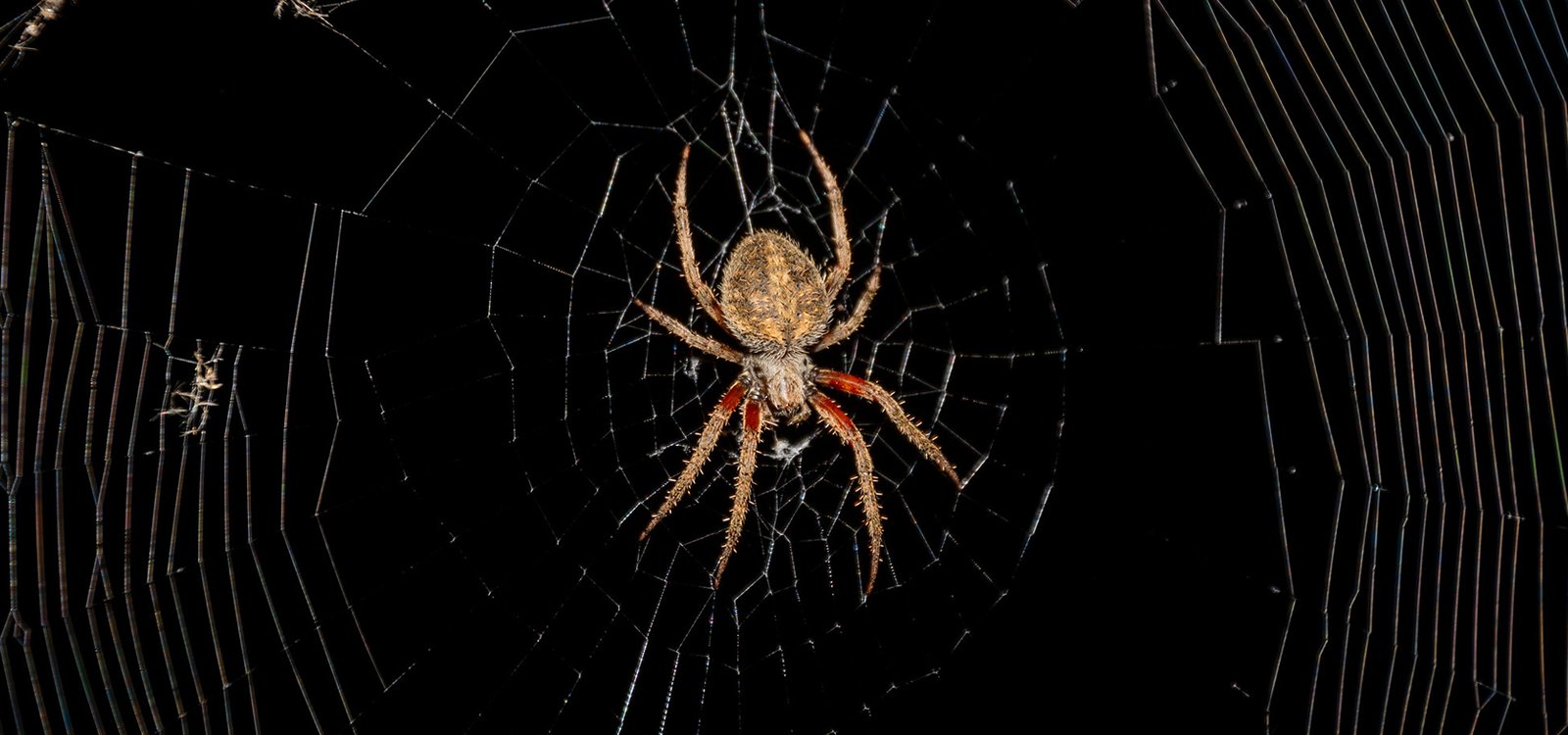
Spiders, belonging to the class Arachnida, are found on all continents except Antarctica. There are more than 48,000 described species worldwide, with an incredible variety of colors, sizes, and behaviors. Some spiders are nocturnal and solitary hunters, while others create complex structures in their habitat. In places like the Manu National Park in the Peruvian Amazon, spiders show great diversity. Their presence is not only impressive due to their size and behavior but also because of the biodiversity they represent. Let’s explore some of the species that can be found on your trip to Manu National Park.
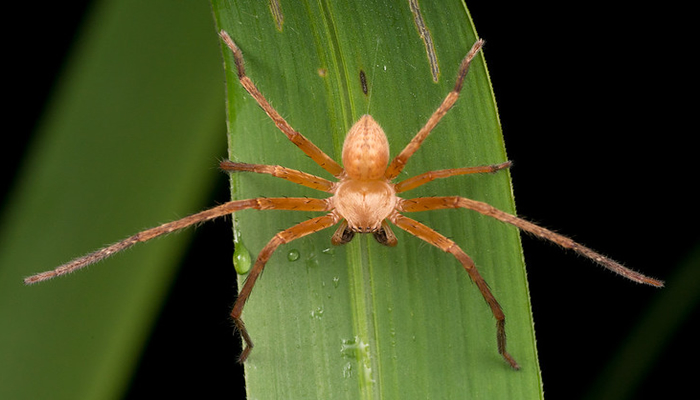
Huntsman Spider (Olios sp)
They are found in a variety of habitats, ranging from savannas to tropical forests. Their size varies, from small to large, and they have a total of 8 eyes. Their coloration is usually light brown with dark brown areas. They are nocturnal hunters and are often seen in vegetation, although they rarely venture near houses. While they can inject venom through a bite, the symptoms are mild and do not pose a serious threat to humans.
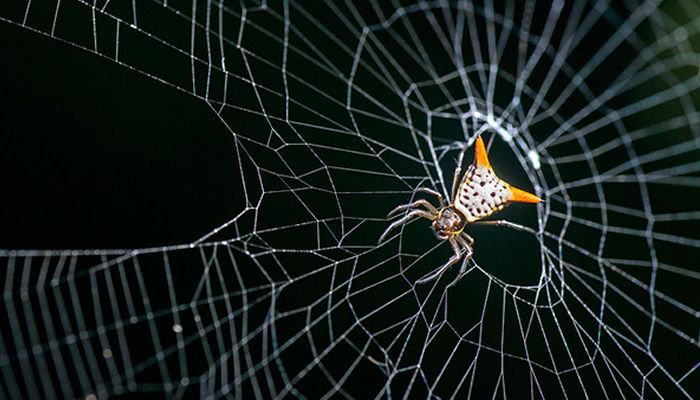
Thorn Spider (Micrathena sp)
The Micrathena sp., also known as thorn spiders, are small orb-weaving spiders that exhibit sexual dimorphism, with males being significantly smaller than females. Their venom is harmless to humans. These spiders are more active during the day and are rarely seen at night. Their preferred habitat is dense forests, particularly near ponds or bodies of water. The lifespan of Micrathena sp. is, on average, one year.
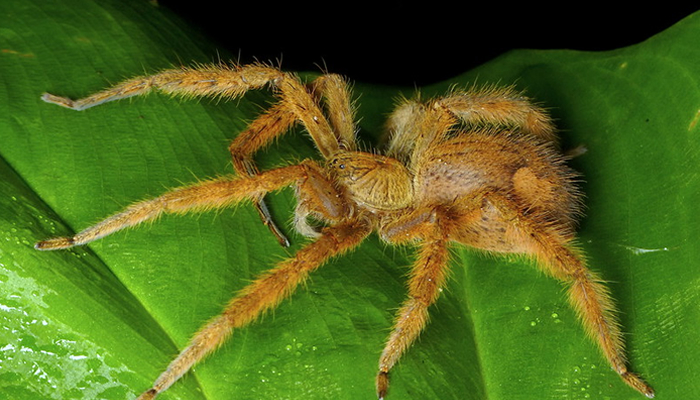
Wandering Spider (Phoneutria sp)
These large spiders can be aggressive. They are nocturnal and hide under fallen trunks, banana plants, termite mounds, and other refuges during the day. They are feared for their venom, which can cause intense pain, paralysis, and, in extreme cases, respiratory difficulty in humans. Unlike other spiders, they do not build webs, so they are constantly moving in search of prey. Despite their fearsome reputation, they usually do not attack humans unless they feel threatened.
Whip Spider (Heterophrynus elaphus)
Whip spiders are not dangerous to humans nor do they have medical significance, as they are not venomous. They are generally very shy and non-aggressive. They play an important role in biological control by feeding on insects such as cockroaches, helping maintain ecological balance. These species are nocturnal and tend to hide during the day in rock crevices or tree hollows. Despite their intimidating appearance, their behavior is generally harmless, and they prefer to avoid human contact.
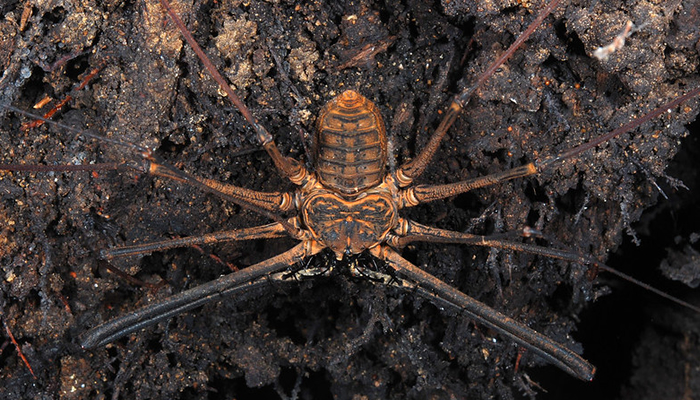
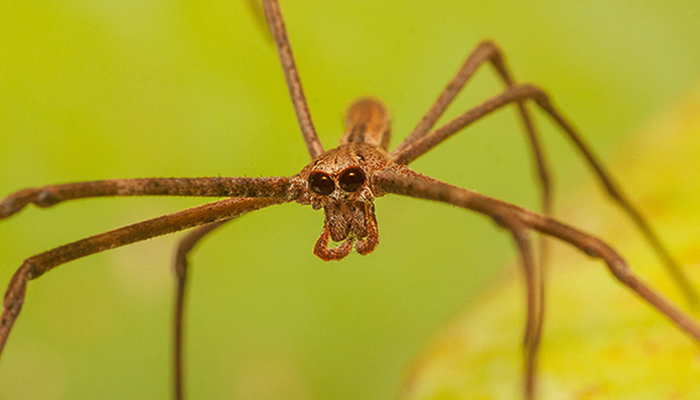
Net Casting Spider (Deinopis sp)
The Deinopis sp. is a fascinating spider that captures its prey using a unique technique: it throws a “parachute-like” web to catch flying insects. Its body is slender and elongated, resembling a stick, with extremely thin legs that allow it to move with agility in its environment. This species exhibits sexual dimorphism, with males being smaller and thinner than females. It is primarily found in tropical rainforests, where it is most active at night.
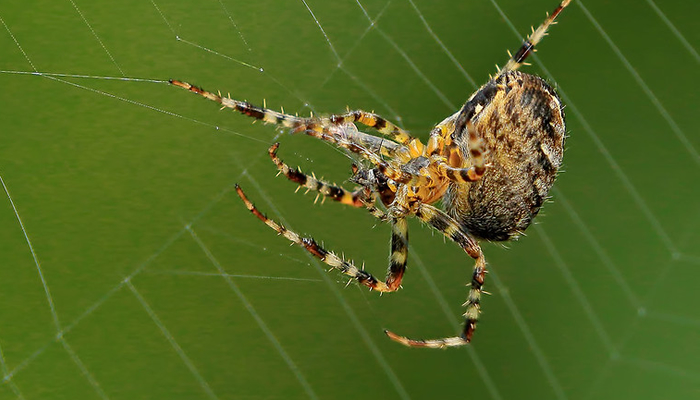
Orb Weaver Spider (Eriophora sp)
The Eriophora sp., known as the orb-weaving spider, belongs to the Araneidae family and is characterized by constructing large spiral webs. These small spiders have coloration that helps them blend into their natural surroundings. They mainly feed on insects that get trapped in their webs and are more active at night. They play a crucial role in pest control by capturing and consuming flying insects.
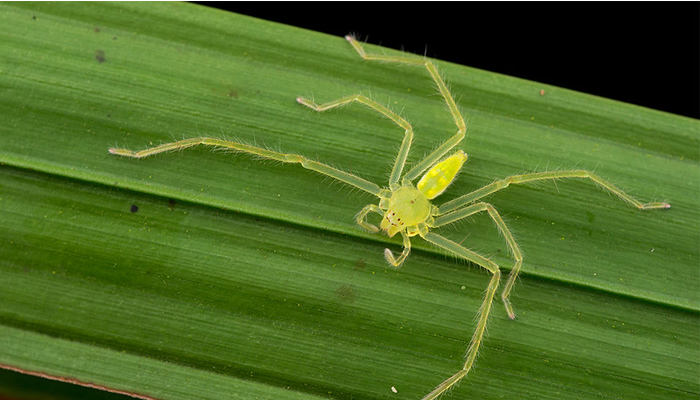
Green Huntsman Spider (Micrommata virescens)
The Micrommata virescens belongs to the Sparassidae family. Males are usually smaller than females. These spiders are mainly found on the edges of forests, where they prefer habitats with tall grass and low tree branches. They are diurnal spiders that do not build webs, instead hunting actively for prey in the vegetation, using their agility and camouflage to capture insects and other small arthropods.
The spiders of Manu National Park represent a fascinating example of Amazonian biodiversity, with a wide range of species adapted to different habitats. Their presence is key to pest control and maintaining ecological balance in the region. Although some may seem intimidating, they are essential to the health of the ecosystems.
