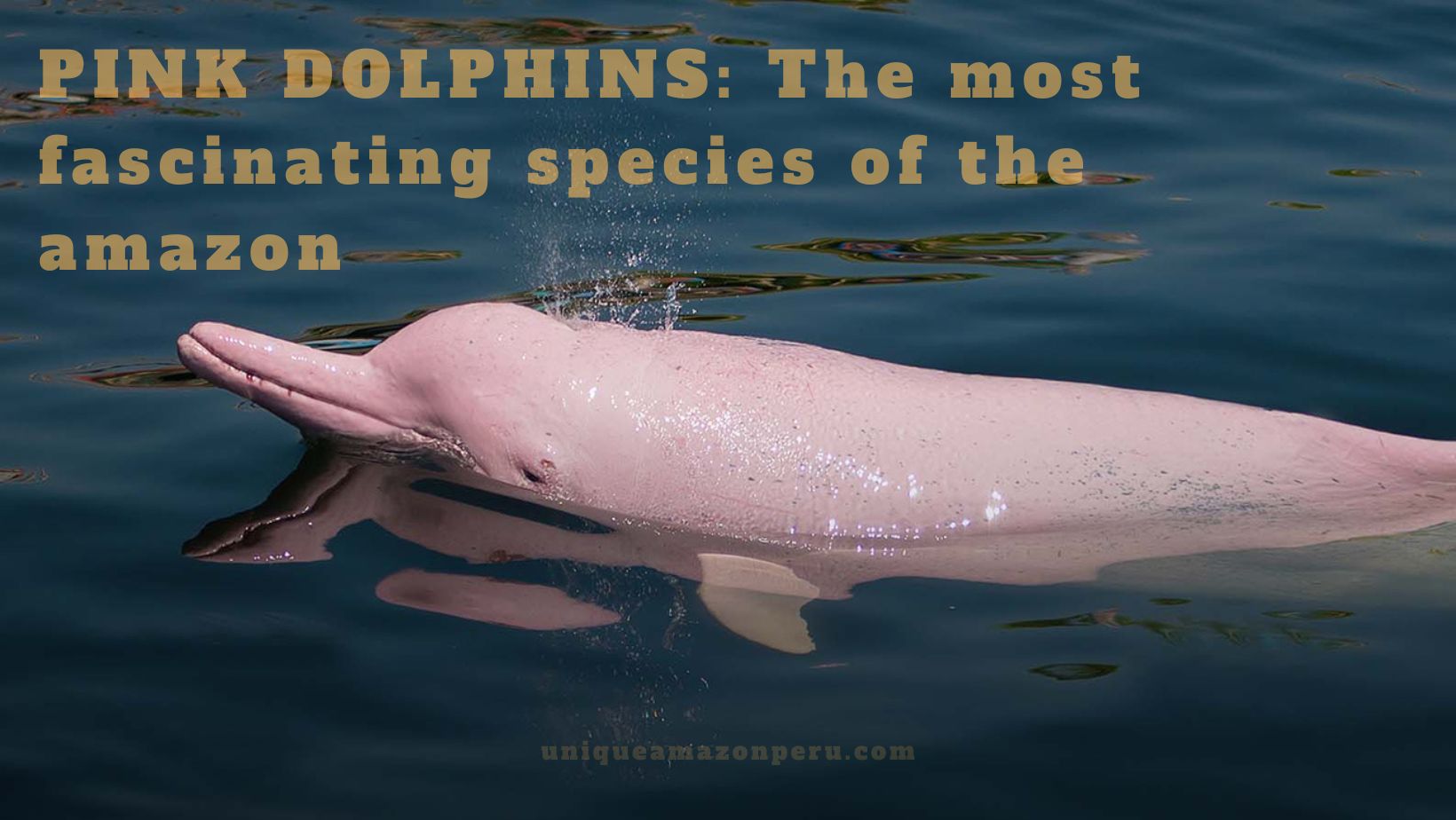
Imagine cruising along the majestic Amazon River, when suddenly, you hear the chorus of a pod of dolphins. You lean over to spot them, expecting the typical gray hue, but instead, you’re greeted with a vibrant pink! These are the pink dolphins, a unique species that inhabits the rivers, lakes, and floodplains of the Peruvian Amazon. Discover more about this fascinating mammal, which has inspired efforts to protect it from extinction in the region.
The pink dolphin, also known as the Amazon river dolphin, is one of the most fascinating and iconic creatures of the Amazon’s waterways. Its vibrant color, which changes with age and mood, and its social behavior make it an intriguing species. These dolphins live in the freshwater, winding waters of the Amazon, playing a vital role in maintaining the ecological balance of this unique ecosystem.
Fascinating Characteristics of the Pink Dolphin
The pink dolphin is easily recognizable by its pink skin, which intensifies over time and can vary based on water temperature or excitement. While they are born gray, young dolphins turn pink as they grow, giving them a distinctive appearance. Their adaptability to the aquatic environment is remarkable; their flexible bodies allow them to navigate easily through both deep and shallow waters of the Amazon.
Behavior and Social Life of the Pink Dolphin
These dolphins are highly social and form groups called pods. Within the pods, dolphins communicate using a variety of sounds, which help them strengthen their bonds and cooperate in hunting. In addition to their intelligence, they are known for their playful nature, performing jumps and acrobatics in the water, which not only entertain onlookers but also facilitate social interaction.

Lifespan and Places to See Them
The Amazon pink dolphin, also known as Inia geoffrensis, has an average lifespan of 15 to 20 years in the wild. However, some individuals can live up to 30 years under optimal conditions.
The pink dolphin and marine dolphins are not closely related, as they come from different families within the cetaceans. The pink dolphins separated from their oceanic ancestors about 15 million years ago, during the Miocene. Compared to marine dolphins, river dolphins are smaller, have a longer beak, sharper teeth, and exhibit physical traits adapted to freshwater life, such as “fingers” on their fins and a smaller dorsal fin.
