 The Diversity of Fauna in the Peruvian Amazon. Peru, known for being an unbeatable tourist destination, stands out not only for its impressive archaeological sites but also for the astounding biodiversity of the Amazon Rainforest. This vast natural paradise is home to an incredible variety of species, making it an unmissable destination for wildlife enthusiasts.
The Amazon region of Peru, which includes the famous Manu National Park, is recognized as one of the places with the highest biodiversity on the planet, providing an unforgettable experience for those who wish to explore the secrets of nature.
Manu National Park, part of the largest tropical rainforest in the world, is home to an unparalleled biological diversity. Its unique ecosystems offer the opportunity to closely observe an impressive array of mammals, birds, reptiles, and amphibians, making this place a true paradise for nature photographers and wildlife watchers. If you’re looking for an ecotourism destination in Peru, there is no better option than to venture into the Amazon rainforest, a refuge that astonishes everyone with its diversity of flora and fauna, being the region with the greatest biodiversity in the world.
Discovering the Unique Species of Manu National Park
JAGUAR (Panthera onca)
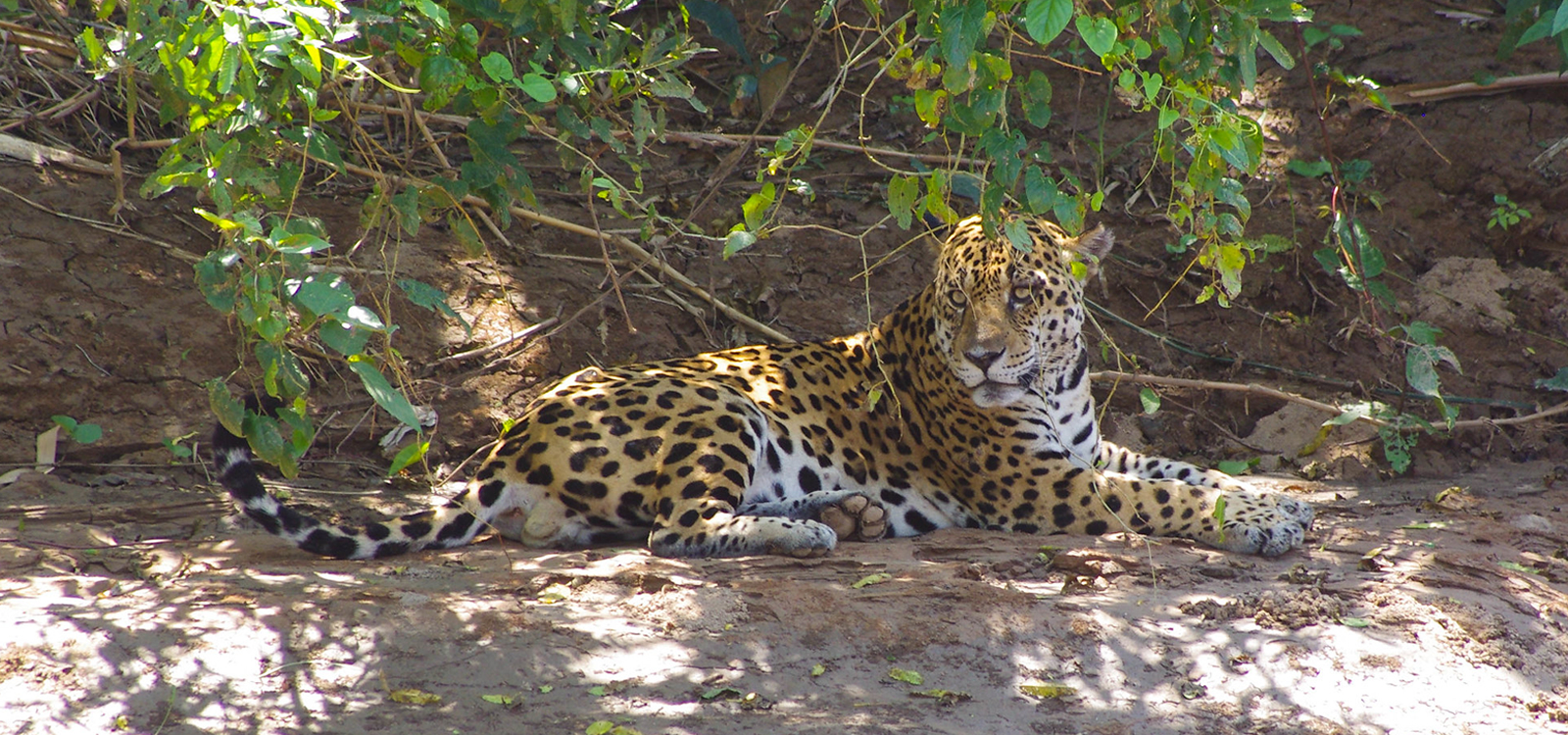
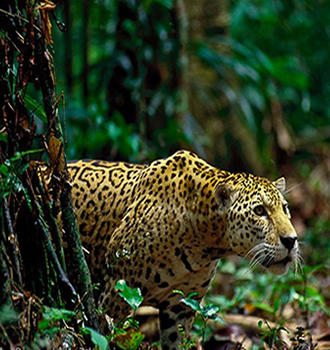 The jaguar is the largest feline in the Americas and a vital apex predator for the Amazon rainforest ecosystem. Its habitat ranges from tropical forests to the swampy areas of Manu, where it plays a crucial role in biodiversity.
The jaguar is a solitary and territorial predator, known for its cunning and strength. It uses excellent camouflage to stalk prey such as deer and capybaras, and is famous for its hunting technique, which includes a lethal bite . Additionally, it marks its territory with scratches and feces, establishing clear boundaries with other jaguars.
The best months to spot jaguars in Manu National Park are from June to October, during the dry season. During this time, jaguars come close to the banks to hunt and sunbathe.
HARPY EAGLE (Harpagornis harpyja)
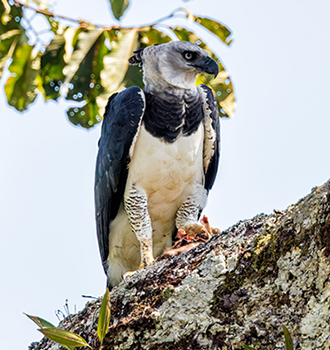 The harpy eagle is one of the largest and most powerful birds of prey in the world, known for its impressive wingspan that can reach up to 2.2 meters. Manu National Park is one of the best places to observe them, with a bit of luck.
This species is a solitary hunter that uses tall trees to spot its prey; it primarily feeds on arboreal mammals, such as monkeys, and has extremely strong talons that allow it to easily catch its prey.
Conserving this majestic bird is vital for the balance of the ecosystem it inhabits, as it acts as a predator within its habitat. Moreover, it is a symbol of power and beauty in many local cultures throughout the Amazon.
BLACK CAIMAN (Melanosuchus niger)
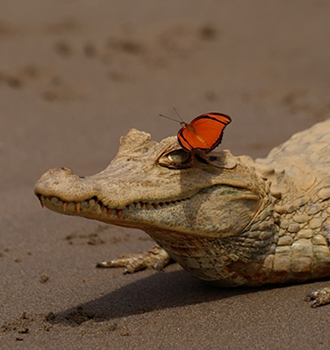
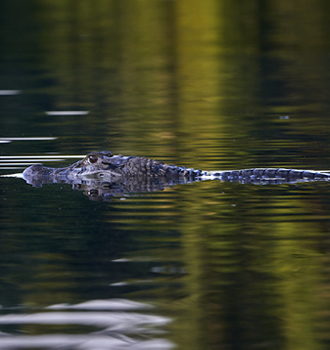 The black caiman (Melanosuchus niger) is one of the most impressive reptiles in Manu National Park, noted for its large size and robustness. It can reach lengths of up to 5 meters, making it the largest of the caimans.
Its dark skin provides excellent camouflage in murky waters, facilitating the hunting of prey such as fish, birds, and small mammals. Black caimans are most active at night, making them effective nocturnal hunters.
Conserving the black caiman is essential for maintaining ecological balance in Manu. Its presence is an indicator of a healthy and diverse ecosystem. Observing the black caiman in its natural habitat is a fascinating experience for visitors to Manu National Park. MOUNTAIN LION (Puma concolor)
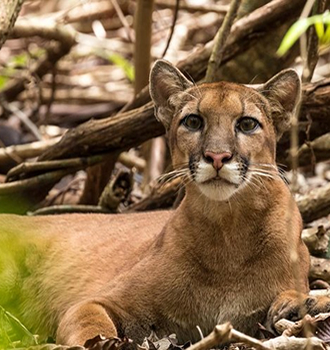 The puma (Puma concolor) is a key predator in Manu National Park, known for its agility and adaptability to various habitats. It can be found in both lowland forests and high-altitude grasslands, often roaming long distances in search of food. This feline can weigh between 29 and 90 kg and measure up to 2.4 meters in length, including its tail.Its light brown or grayish coat provides excellent camouflage in the jungle vegetation. Its presence in Manu indicates a healthy and balanced ecosystem. Pumas are often found near bodies of water, such as rivers and lagoons, where food availability is higher.
TARICAYA (Podocnemis unifilis)
 Taricaya turtles (Podocnemis unifilis) are recognized for their light brown shells and medium size. These semi-aquatic turtles inhabit rivers, lagoons, and swamps in the Amazon region.
Their diet mainly consists of fruits, leaves, and aquatic vegetation. Nesting occurs between December and March, when females emerge onto beaches to lay their eggs.
They can weigh between 4 and 10 kg and reach lengths of up to 50 cm. In terms of lifespan, they can live around 30 to 40 years in their natural habitat, although in captivity, with proper care, they can live even longer.
RED HOWLER MONKEY (Alouatta spp.)
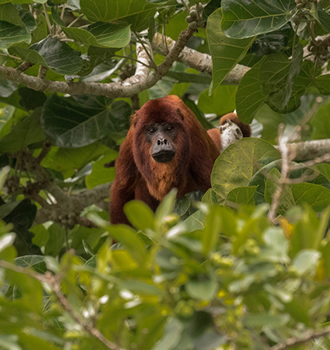 Also known as canopy monkeys, they are always found high in the trees. They are one of the most iconic and loudest primates of the Amazon rainforest, recognized for their resonant howls that can be heard from up to 2 kilometers away.
These fascinating monkeys live in social groups, creating a vibrant atmosphere in the tree canopies of Manu National Park. Their diet mainly consists of leaves, fruits, and flowers, aiding in seed dispersion.
Howler monkeys are diurnal creatures, and their playful and social behavior makes them a charming spectacle for visitors.
CAPYBARA (Hydrochoerus hydrochaeris)
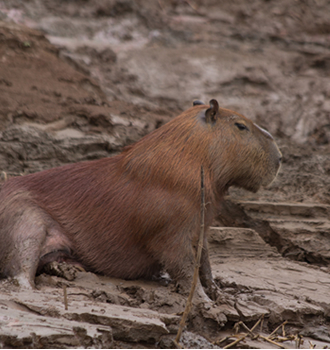 Considered the largest rodents in the world, capybaras can weigh up to 65 kg and measure approximately 1.3 meters in length. They are commonly found near bodies of water, such as rivers, lagoons, and swamps (it’s quite common to see them walking along the Manu River).
These animals are highly social and live in groups that can range from 5 to 20 individuals. They are excellent swimmers, and their skin has adaptations that allow them to spend much time in the water, where they submerge to escape heat or threats.
Their calm and sociable nature makes them a popular attraction for ecotourists visiting Manu.
GIANT OTTER (Pteronura brasiliensis)
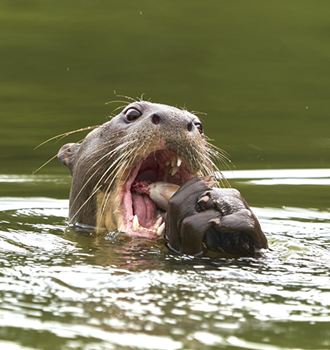 One of the best places to see giant otters is in Manu National Park, which hosts a significant number of species in lakes like Lake Salvador, where they can be seen active during the day, eating, playing, and sunbathing.
River otters face predators like jaguars, caimans, and eagles. These predators, especially jaguars and caimans, may attack otters when they are in the water or on the banks. Additionally, some large snakes can threaten young otters.
Despite these risks, otters use their social behavior and agility to evade predators in their habitat.
AMAZONIAN SLOTH
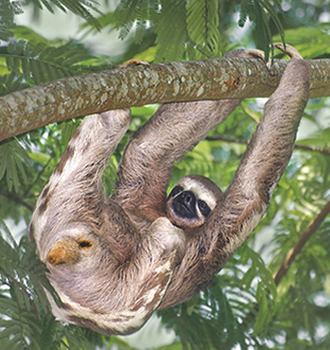 Manu National Park is home to two species of sloths: the two-toed sloth (Choloepus spp.) and the three-toed sloth (Bradypus spp.). Both species are known for their extremely slow behavior and specialized diet of leaves, particularly from trees like cecropia and bamboo. Sloths often have a greenish appearance due to the presence of algae in their fur, providing camouflage in their natural habitat.
Despite their clumsy appearance, they are excellent swimmers. Their lifespan can reach up to 30 years in the wild.
Sloths can sleep between 15 and 19 hours a day. Their sedentary lifestyle and low-calorie diet allow them to spend most of their time resting in the treetops.
SOUTH AMERICAN TAPIR (Tapirus terrestris)
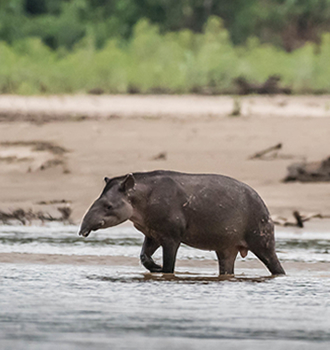 The South American tapir is the largest terrestrial mammal in South America and is related to horses and rhinoceroses. Its short trunk helps it feed on leaves, fruits, and grasses.
Tapirs can be found in the rainforests, swamps, and flooded forests, such as those in Manu National Park. They are semi-aquatic animals, often seeking refuge in water to escape from predators.
Their fur is dark brown or black. They are primarily nocturnal and crepuscular, meaning they are most active during the night and at dawn. Despite their size, tapirs are quite solitary and can have an activity range that spans several kilometers.
AGOUTI (Dasyprocta punctata)
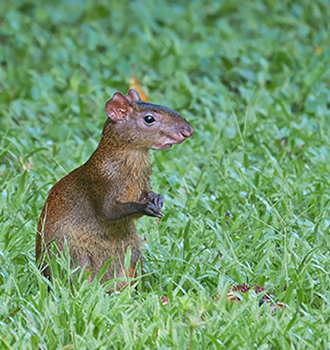 Agoutis are medium-sized animals with robust bodies and short legs, measuring between 50 and 60 cm in length. Their fur is generally brown or gray, providing good camouflage in the forest.
Agoutis are quick and agile, which helps them escape predators such as jaguars and snakes. They are diurnal but can often be seen foraging at dawn or dusk at clay licks, where they go to neutralize toxins and obtain essential minerals.
Their social behavior varies; although they are primarily solitary, they can be seen in pairs or small groups, especially during the breeding season. Females typically give birth to one or two young after a gestation period of about three months.
ANACONDA (Eunectidae family)
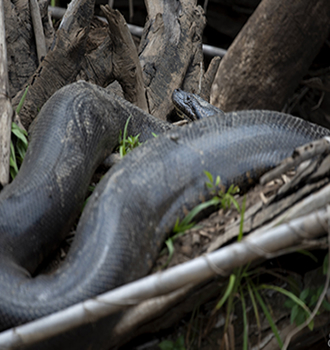 They are often spotted in the reserved area of Manu National Park, either in lakes, rivers, etc. The anaconda is one of the largest and heaviest snakes in the world, reaching weights of up to 250 kg and lengths of 9 meters.
Their diet consists of mammals and birds, using their strength to constrict and suffocate their prey before swallowing them whole.
Manu National Park is home to two species: the green anaconda (Eunectes murinus), which is the largest, and the yellow anaconda (Eunectes notaeus), which is slightly smaller and has a brighter coloration pattern with yellow and dark tones. Anacondas have a relatively low metabolic rate, allowing them to survive for extended periods without food after consuming a large meal.
GIANT ANTEATER (Myrmecophaga tridactyla)
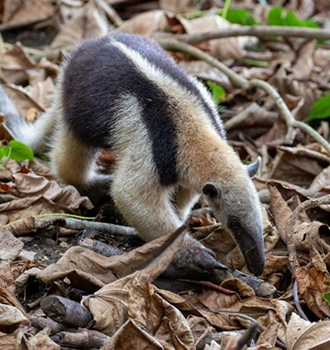 The giant anteater is quite large, reaching lengths of up to 2 meters. It is characterized by its elongated snout and long, sticky tongue, which it uses to feed on ants and termites, its primary diet.
They are solitary and tend to be more active during the day. They can be found in various habitats, including cloud forests and tropical rainforests, where they can move agilely through dense foliage.
Their fur is gray to brown, with lighter spots on the underside. Although they are not common, their presence in Manu indicates a healthy ecosystem, and their conservation is crucial for maintaining the balance of wildlife in the region.
OCELOT (Leopardus pardalis)
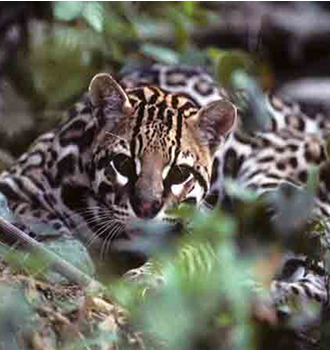 Ocelots are solitary and nocturnal animals, though they also exhibit diurnal habits. One of their characteristics is their ability to climb easily, allowing them to capture prey in trees, such as monkeys, while also being skilled hunters on the ground, hunting agoutis, opossums, small caimans, snakes, and more.
They can often be seen sleeping in places like caves, logs, trees, or dense vegetation; these locations provide safety from predators. Ocelots are highly territorial, to the extent that they may die defending their territory.
Their reproduction occurs year-round; after courtship, the mother has a gestation period of 70 to 80 days, eventually giving birth to 1 to 5 puppis.
SOUTH AMAERICAN WILD DOG (Speothos venaticus)
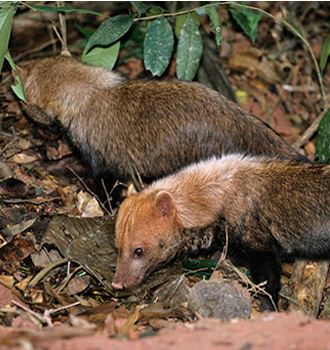 South American wild dogs inhabit the tropical forests and wetlands of the Peruvian jungle. They are highly social animals that live in groups, which aids them in hunting and protecting against predators. They are carnivorous, feeding on rodents, birds, and other small mammals.
In terms of reproduction, these dogs are polygamous and typically have litters of 3 to 5 puppies after a gestation period of 60 to 67 days, occurring once a year.
Communication among them is essential; they employ a variety of vocalizations, visual signals, and scent markings to interact and maintain group cohesion.
PECCARY (Tayassu tajacu)
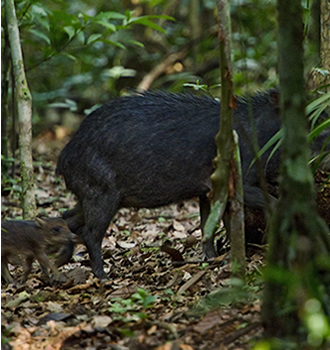 Peccaries are native to South America and can be found in various regions, including Peru. These animals prefer habitats such as tropical forests, savannas, and areas with dense vegetation, where they can easily find shelter and food. Their adaptability allows them to survive in different ecosystems.
Peccaries are omnivorous, feeding on roots, fruits, tubers, small animals, and insects. Generally, they are more active during dawn and dusk, making them crepuscular animals.
Regarding reproduction, females can have litters of 2 to 4 young after a gestation period of about 140 days. The young are precocial and can start feeding on grass and other solid foods.
TAMANDUA (Tamandua tetradactyla)
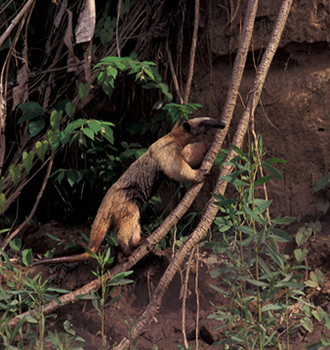 This animal belongs to the anteater family and is characterized by its elongated body, narrow snout, and long tongue, designed to feed on ants and termites, which are its primary food source in the Amazon.
Tamandua is found in various habitats. Its behavior is semi-arboreal, meaning it spends a significant amount of time in trees, seeking both food and shelter. Its diet also includes some fruits, which help it obtain additional nutrients.
This mammal is primarily nocturnal and solitary, being more active at night and resting in trees or holes during the day. Its fur varies from brown to yellow, with a notable “V” mark that runs across its back.
SPIDER MONKEY (Ateles chamek)
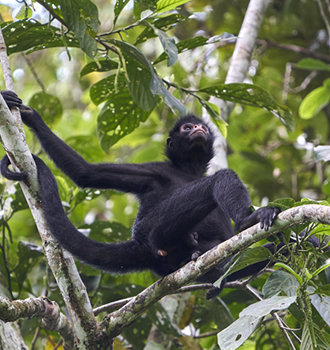 Spider monkeys are social, living in family groups of between 10 and 30 individuals. Communication among them is varied; they use vocalizations, gestures, and facial expressions to maintain group cohesion.
This species is characterized by using all its limbs, allowing it to move quickly and efficiently through the treetops. Its diet is primarily based on fruits, but it also consumes leaves, flowers, and occasionally insects.
The female gives birth to a single offspring after a gestation period of approximately six months. The young are cared for by the mother and other group members, which increases their chances of survival in the jungle.
GIANT ARMADILO (Priodontes maximus)
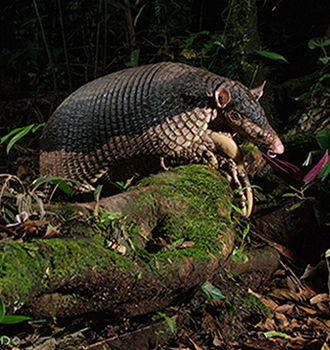 They are omnivorous, primarily composed of insects, larvae, and some fruits and plants. Their digging ability allows them to access underground tunnels where they find their food, using their strong claws to dig.
Regarding reproduction, the giant armadillo has a gestation period that varies between 60 and 120 days, usually giving birth to a single offspring. The mother cares for the young during its first months of life, providing protection and teaching it to forage.
The giant armadillo is notable for its size, reaching up to 1.5 meters in length, including its tail. Its shell is made up of bony plates covered with skin, providing protection against predators.
MACAWS (Psittacidae family)
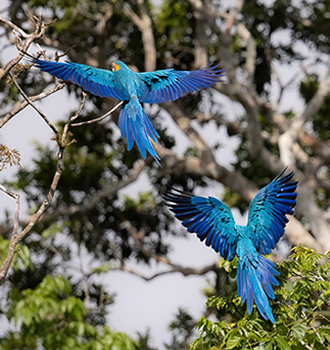 In the Peruvian Amazon rainforest, a wide variety of macaws can be found, including the military macaw, blue-and-yellow macaw, and scarlet macaw, among others. They typically inhabit the rainforest. They possess strong, curved beaks adapted to cracking nuts and seeds, which make up the majority of their diet.
Macaws often look for holes in trees that have been excavated by woodpeckers, taking advantage of these natural cavities for nesting. With their strong beaks, they often widen these holes to make them more comfortable. They frequently choose palm trees, which are ideal due to their size and the protection they offer, creating a safe environment for raising their chicks.
