The road connecting Cusco to Manu National Park is much more than just an access route to this world-renowned natural destination. Known as the Manu Road, this stretch offers one of the best birdwatching opportunities in Peru without the need to venture deep into the jungle. This blog provides detailed and accurate information about the birdwatching experience along this route, perfect for an unforgettable ornithological journey.
Road to Manu National Park
Manu Road is a scenic route that crosses diverse ecosystems from the Andes to the Amazon rainforest, covering the park’s Cultural Zone. This ecological transition offers a gradual change in landscapes and habitats, from cloud forests to dense tropical rainforest. Thanks to this variety of ecosystems, the road becomes a perfect biological corridor for birdwatching.

a). BIRD DIVERSITY ALONG MANU ROAD
The road is famous for its high diversity of birds. Along this route, more than 300 bird species can be observed, many of which are endemic to the Andes and the Amazon. Some of the most notable species include:
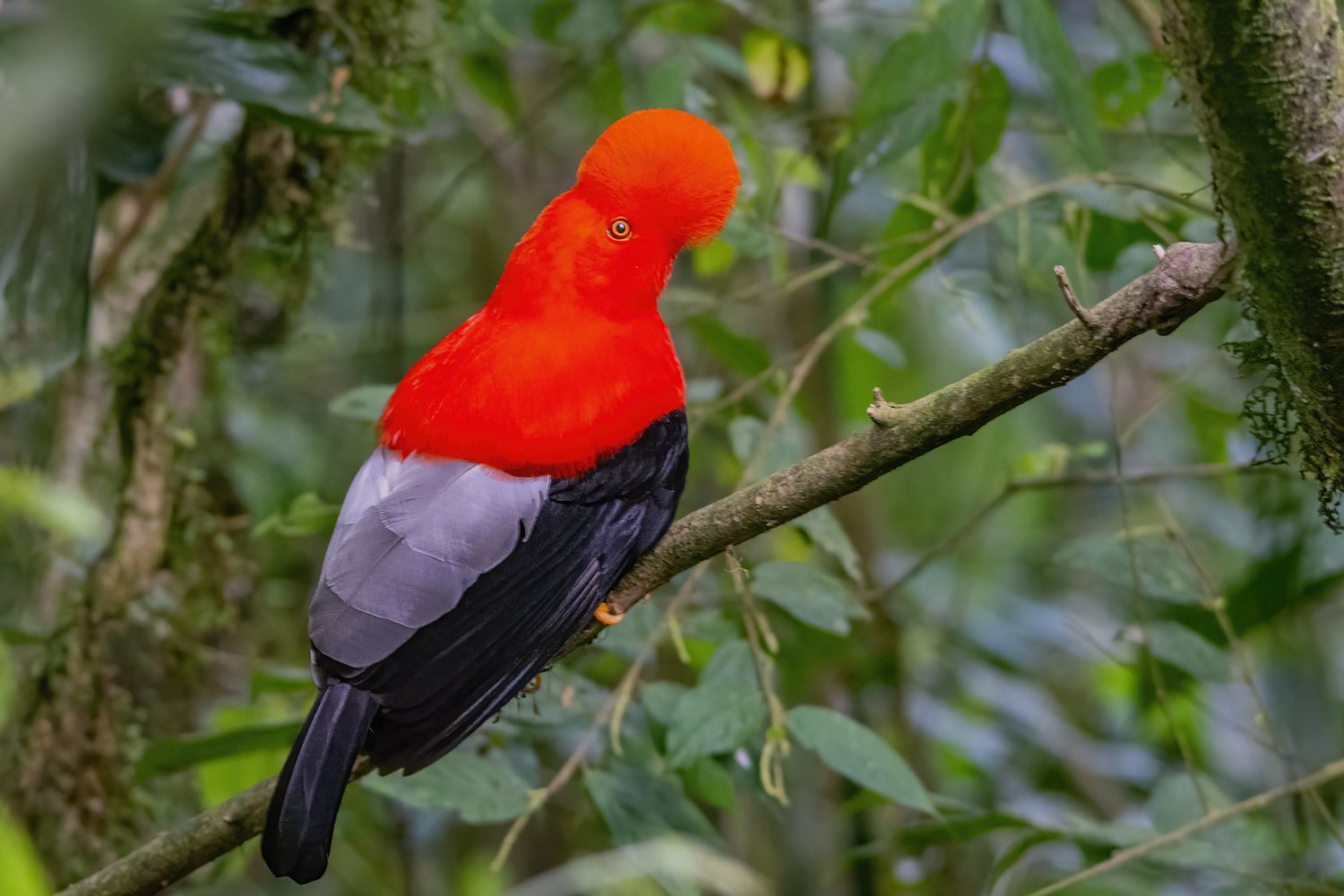
- Andean Cock-of-the-Rock (Rupicola peruvianus): The national bird of Peru, recognizable by its vibrant red color and fascinating courtship displays.
- Multicolored Tanagers: With their dazzling variety of colors, they are easy to spot on the forest edges.
- Gray-breasted Mountain Toucan: A jewel of the Andean forests, elusive yet unforgettable for those fortunate enough to spot it.
- Andean Hummingbirds: Such as the Sword-billed Hummingbird (Ensifera ensifera), known for its long bill adapted for feeding on tubular flowers.
- Golden-headed Quetzal (Pharomachrus auriceps): A jewel of the cloud forest, hard to see but unforgettable for those who find it.
- Macaws, Toucans, and Cotingas: Present as you descend toward the tropics.
b). BEST BIRDWATCHING SPOTS ON MANU ROAD
Travelers on this route can stop at several key points to enjoy birdwatching. Some of the most recommended areas are:
- Acjanaco Cloud Forest: The highest point on the road, located at the Acjanaco Pass, over 3,500 meters above sea level. Here, you can spot high-altitude birds such as the Andean Condor, the Golden-headed Quetzal, and tanagers.
- San Pedro and Pillcopata: As you descend from the Andes to the cloud forest, these areas are rich in biodiversity. In San Pedro, visitors can see tanagers, hummingbirds, and the iconic Andean Cock-of-the-Rock in its natural habitat.
d). TIPS FOR BIRDWATCHERS ON MANU ROAD
- Recommended Equipment: Bring high-quality binoculars, a camera with a telephoto lens, lightweight clothing in neutral colors, and trekking boots.
- Best Time to Visit: The dry season (May to November) is ideal for birdwatching, with clear skies and fewer mosquitoes.
- Respect Nature: Stay on marked trails, do not feed the wildlife, and avoid using recordings to attract birds, as it can alter their natural behavior.
CONTRIBUTION TO CONSERVATION AND SUSTAINABLE ECOTOURISM
Birdwatching along the Manu Road not only offers a memorable experience but also promotes sustainable ecotourism, benefiting both local communities and conservation efforts. Many travel agencies collaborate with communities and conservation projects, supporting the preservation of this fragile ecosystem.
Conclusion
The Road to Manu National Park is a biodiversity hotspot and a must-visit destination for birdwatching enthusiasts. With its accessibility, diversity of habitats, and impressive variety of birds, it is an excellent option for those looking for a birdwatching experience without venturing deep into the jungle. Get ready to discover the magic of Manu and its birds on this fascinating road adventure!
