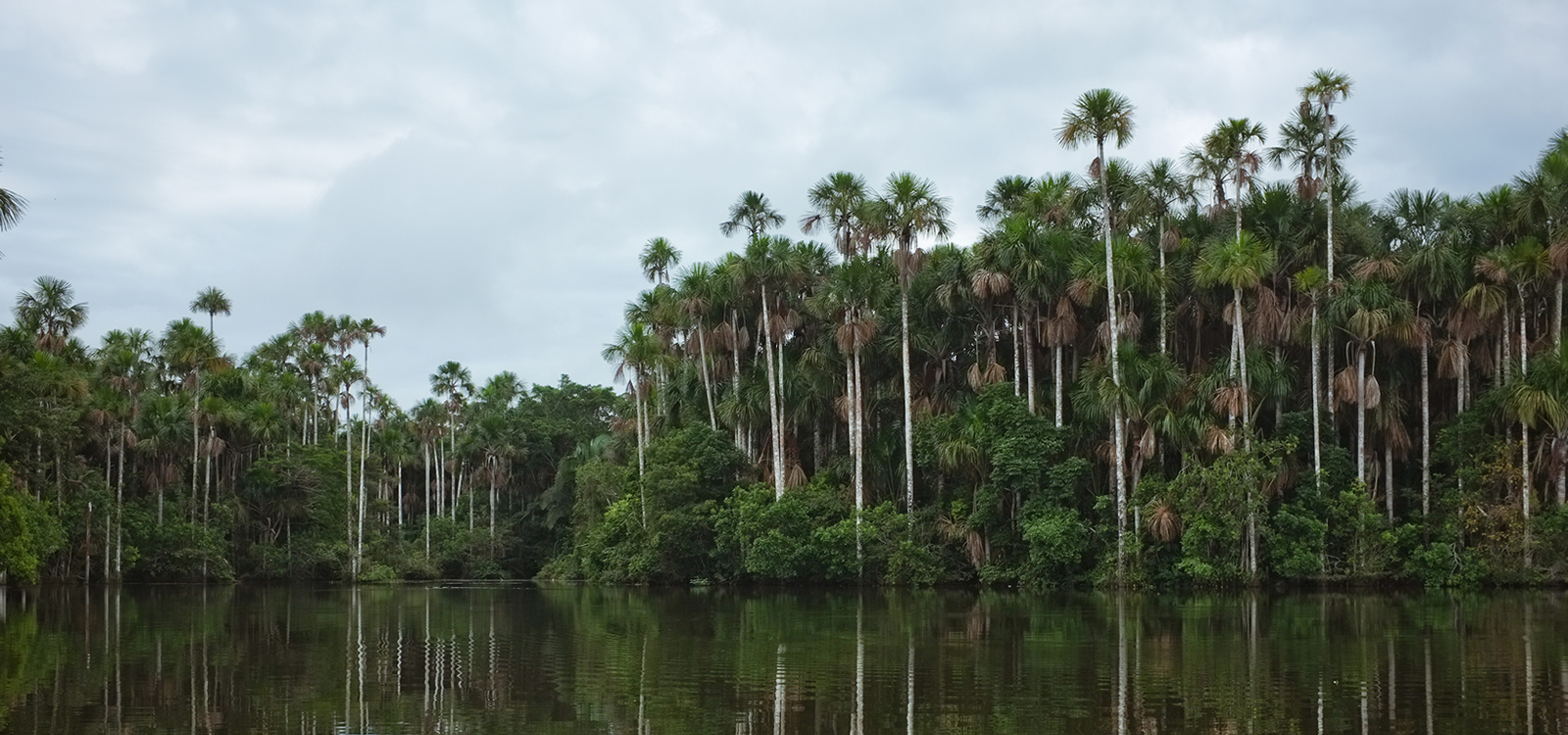
LOS AGUAJALES
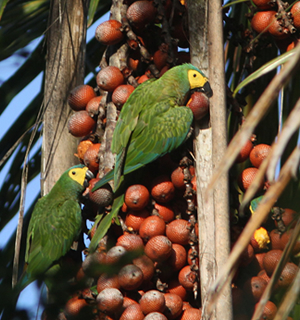
Macaws eating Moriche fruits
Aguajales are wet and forested ecosystems primarily found in the Amazon and other tropical regions of South America. These habitats are distinguished by the abundant presence of the aguaje palm (Mauritia flexuosa), whose fruits are highly valued in the region for both their taste and nutritional properties. Aguajales develop in areas of seasonal flooding, where river waters cover the land during certain times of the year, creating a unique environment rich in nutrients and exceptional biodiversity. These ecosystems are not only a refuge for many species, but they also play a crucial role in regulating the hydrological cycle and conserving the soils of the Amazon region.
Why Are Aguajales Important for Animals?
Aguajales play a vital role for the fauna that inhabits the Amazon. These ecosystems provide essential resources for many animals, both in terms of food and habitat. Below are some of the main functions that aguajales serve for animals:
- Source of Food: The fruit of the Mauritia flexuosa palm, known as aguaje, is a key food source for many animals. When the fruit is still on the tree, it can be seen being eaten by macaws, monkeys, toucans, and others. Once the fruit falls to the ground, other animals such as tapirs, peccaries, agoutis, and more come to feed on it. The fruits are rich in nutrients and sugars, making them a vital energy source for the species that consume them.
- Refuge and Habitat: The dense vegetation of aguajales, combined with seasonal waters, provides refuge and space for animals to hide from predators, reproduce, and raise their young. Aguajales are critical habitats for various species of birds, mammals, and reptiles that rely on the dense vegetation and stagnant waters for survival.
Where Can We Find These Ecosystems?
In Peru, aguajales are distributed across several Amazonian regions, with a particular emphasis in protected areas such as national parks, natural reserves, and conservation zones. Below are some of the most important aguajales in the Peruvian Amazon:
- Manu National Park
- Tambopata National Reserve
- Pacaya Samiria National Reserve
- Alto Purus National Park
